Accessible Events Start Here: 5 Practical Steps That Actually Work
Accessible Events Start Here: 5 Practical Steps That Actually Work
Planning an event? Accessibility might not be the first thing on your list, but it should be. Inclusion is more than legal compliance or ticking a checkbox. It’s about creating a space where people of all abilities feel like they truly belong. The good news? You don’t need to be an expert or have a massive budget to get started. But you must take action.
Here are practical, real-world ways to make your next event more accessible and impactful.

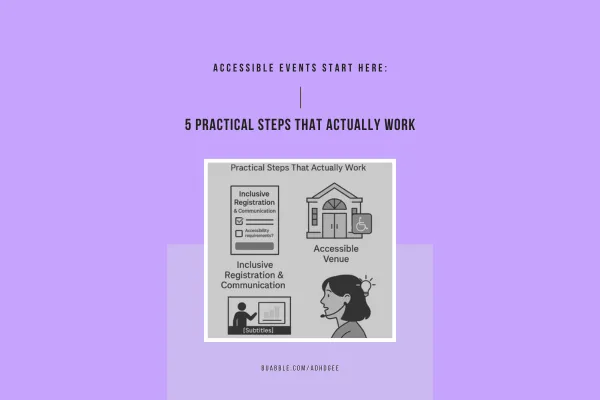
Start with Inclusive Registration and Communication
Inclusion begins before anyone even enters the room. Make it easy for attendees to let you know about their needs when they register. Include an open-ended question like, “Do you have any accessibility requirements we should be aware of?” That small prompt can make a big difference.
Go one step further by stating clearly on your event page or invite that accessibility matters to you. Let attendees know that accommodations are not just welcome, but expected. Then, plan for those requests. Budget time and resources upfront so you’re not scrambling later.
Choose a Venue that Works for Everyone
Choosing an accessible venue is about creating an environment where everyone feels they belong and can participate with ease.
Start by checking the basics: Is the entrance step-free or ramped? Are doorways and hallways wide enough for wheelchair users or people with mobility aids? Is there accessible parking close to the entrance or a convenient drop-off area?
Inside, check for accessible restrooms, not just in the building, but near the event space. If the event spans multiple levels, elevators should be available and functional. Think about lighting and acoustics too. Harsh lights or poor sound systems can create barriers for people with sensory sensitivities or hearing challenges.
Also, pay attention to how the space flows. Leave enough room between tables and chairs for movement. Offer various seating types to accommodate comfort and mobility needs like armless chairs or seating with extra support. Signage should be clear, easy to read, and well-placed.
Pro tip: If you’re touring the space in person, try navigating it as someone with different mobility needs. What feels intuitive? What feels difficult? That lived experience lens can shift your whole approach.
Make Your Content Accessible Too
It’s not enough for attendees to be able to enter the room. They should be able to engage fully with the content too.
Start with your presentation slides. Use large, easy-to-read fonts and high-contrast colour combinations. Avoid relying solely on colour to convey meaning as this is not effective for colorblind viewers. If you use visuals, describe them verbally and use alt-text in digital versions.
Always provide captions for videos and, where possible, offer sign language interpreters for live presentations. Even better, provide live captioning or CART (Communication Access Real-Time Translation) for spoken content. This helps not only Deaf attendees but also those who process information better visually.
Printed materials? Offer digital versions in accessible formats such as screen reader-friendly PDFs. Consider making large-print versions available on request. If your event includes breakout sessions or group activities, ensure facilitators are trained to make their instructions clear and inclusive.
And don’t forget to pre-share materials. Giving people time to review content in advance can reduce anxiety, especially for neurodivergent attendees or those who need more time to process information.
Account for Sensory and Invisible Needs
Accessibility also includes people who face invisible conditions that impact their event experience, including chronic pain, anxiety, sensory processing differences, or cognitive fatigue.
Offer quiet or low-sensory zones where attendees can recharge without leaving the event entirely. Avoid strobing lights, sudden loud music, or crowded, chaotic spaces unless clearly communicated in advance.
Be open to flexibility. For example, allow attendees to arrive early to get oriented or leave and re-enter as needed. Normalising these options helps reduce stigma and increases comfort.
Train Your Team to Welcome Everyone
Even the most accessible layout can fall flat if your team isn’t prepared to support it.
Start with a briefing session that covers basic disability awareness. Your staff and volunteers should know how to interact respectfully with attendees who use mobility aids, communicate differently, or have service animals. Teach simple, respectful phrases like, “Would you like any assistance?” instead of assuming help is needed.
Make it clear that accessibility is everyone’s job and not just the responsibility of one “accessibility officer.” Assign specific team members to be available during the event to support any issues that arise. They don’t have to be experts, but they should know how to listen, escalate concerns, and offer options.
Most importantly, build feedback into your planning cycle. Ask attendees about what worked and what didn’t. Use that feedback to learn, grow, and improve your events over time.
Small Changes, Real Impact
Every thoughtful decision you make sends a powerful message: you care. You want everyone to feel seen, respected, and included. This doesn’t require perfection. Just genuine intention.
Whether you’re organising a small workshop, a major conference, or an award show, you have the power to build events that truly welcome everyone. And when you do, the impact goes far beyond the venue.

