Accessible Events Start Here: 5 Practical Steps That Actually Work
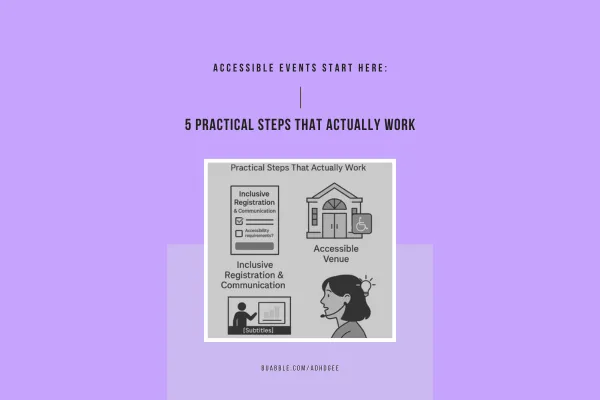
Simple, practical actions to make your events more inclusive, from venue choice to communication and thoughtful planning, so everyone feels welcome and able to participate.

Simple, practical actions to make your events more inclusive, from venue choice to communication and thoughtful planning, so everyone feels welcome and able to participate.

You’ve seen this: It's 3 PM on a Wednesday, and half your team is staring blankly at their screens, fighting the post-lunch energy crash. Sound familiar? What if I told you that 20-30 minutes of guided movement could transform that sluggish afternoon into a burst of creative problem-solving and genuine team connection? That's exactly what's happening in forward-thinking companies worldwide, thanks to an innovative approach that's reshaping workplace wellness: dance and movement workshops for employee groups.

48% of creatives identify as neurodivergent, yet only 18% request workplace accommodations. Meanwhile, 85% of neurodivergent people are unemployed or underemployed, despite bringing measurable productivity gains to organisations. The disconnect isn't subtle, and HR departments are feeling the strain.

What if your company's biggest competitive advantage is walking out the door before you even meet them? Up to 20% of the population is neurodivergent, yet 85% of autistic adults remain unemployed despite demonstrable capabilities. This isn't a talent shortage but recognition failure.